
November 17, 2026
- Shop minimum
- $150
- Consultations
- Always free
- Session deposit
- Varies by project length, from $100
Every tattoo at Idle Hands is custom, so there is no single price list. Our shop minimum is $150, and the final price depends on your design, size, placement, detail, and how much time your artist needs.
This guide covers how pricing works at our Knoxville tattoo shop, why a free consultation is the best way to get a real quote, and what to budget for beyond the tattoo itself.
Start with a free consultation
Consultations are always free. Your artist talks through your idea, placement and size, and that conversation is where an accurate price comes from. If another studio's specialty is a better fit for your design, we may refer you there.
What changes the price
Larger pieces, fine detail, heavy color or shading, difficult placements, and cover-ups usually take longer, and time is the biggest part of a tattoo's cost. Big projects are often done over several sessions.
Rates vary by artist, so ask yours during the consultation rather than comparing a single number between shops.
Why professional tattoos aren't cheap
You are paying for much more than the time the needle is moving. Before your appointment, your artist may research, draw and refine a custom design, plan the placement, and prepare a stencil. On the day, there is a fresh station setup; afterward, the station must be broken down, cleaned and disinfected, and used supplies must be disposed of correctly.
Professional machines, ink, sterile needles or cartridges, barriers, gloves, bandages, continuing education, licensing and the studio itself all sit behind the price. A higher price does not by itself prove quality or safety, but an unusually cheap tattoo may not include the same drawing time, experience, equipment or infection-control process. Ask what the quote includes instead of comparing only the final number.
What goes into a fresh tattoo setup
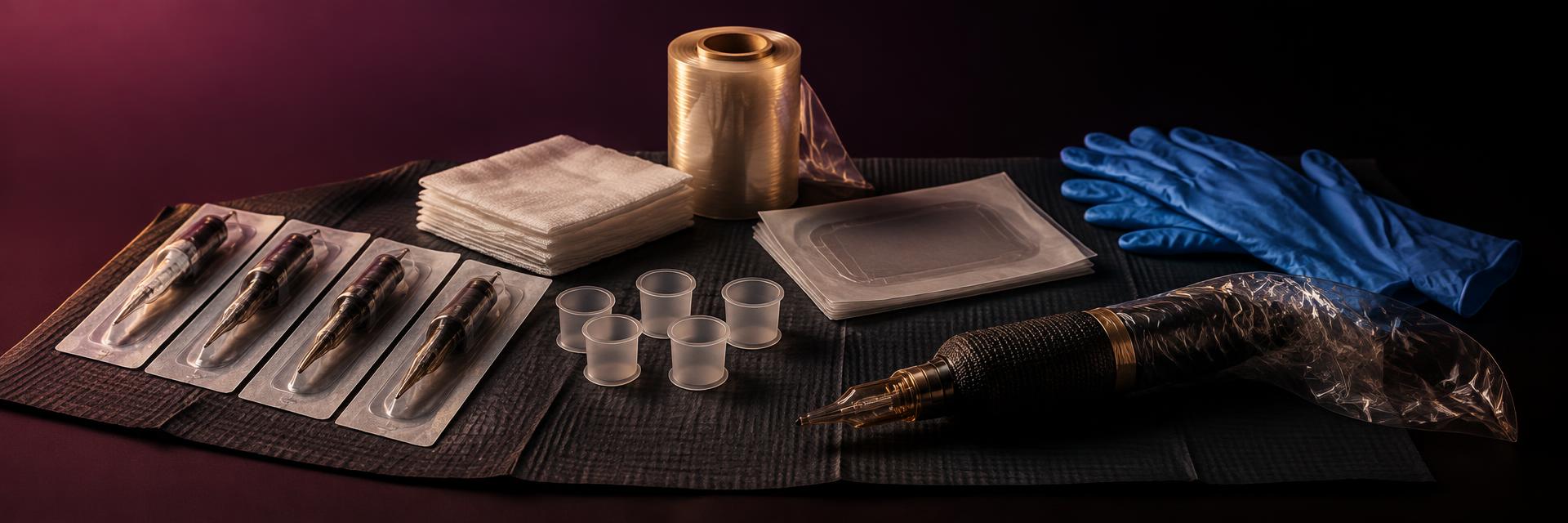
A professional setup commonly includes sterile single-use needles or needle cartridges, examination gloves, single-use ink caps, gauze, a lap cloth or drape sheets, surface barriers, and machine and cord covers. These items do different jobs: sterile components protect the tattooing process, while disposable barriers help keep the work area from becoming contaminated. Not every item on the tray is sterile, and the whole room is not made sterile by putting down a drape.
Needles go into a puncture-resistant sharps container after use. Reusable equipment must be cleaned and then sterilized with an appropriate process; work surfaces are cleaned and disinfected. Cleaning, disinfection and sterilization are different steps, not interchangeable words for wiping something down.
Tennessee's tattoo rules include universal precautions, a sterile needle setup for each client, individual ink portions, a single-use lap cloth, and disinfection of the work area after tattooing. Studios can meet equipment requirements with different workflows, so an all-disposable setup is a process choice rather than something every studio is required to do in exactly the same way.
Tattoo ink and single-use ink caps
Your artist dispenses ink into individual caps for your appointment instead of dipping directly into the stock bottle. Leftover ink in those caps is discarded, not poured back. That means the price includes the ink actually used and the fresh caps and unused dispensed portions that cannot safely go back into the original container.
Ink handling matters because the FDA has found microbial contamination even in unopened, sealed tattoo inks. A sealed bottle is not proof that ink is sterile, and no tattoo ink should be described as 'FDA-approved': the FDA oversees tattoo inks as cosmetics, while state and local authorities oversee tattooing itself. The agency also warns that allergic reactions and infections can occur.
Contamination can also be introduced during handling. A CDC investigation of tattoo-associated infections recommended avoiding dilution with nonsterile water. Choosing an established supplier matters, but it does not replace careful storage, dispensing and single-client handling—or eliminate every possible reaction.
Starter bandages and aftercare products
The initial dressing helps protect a fresh tattoo from rubbing and external contamination. Depending on the tattoo and your artist's process, that may be a temporary dressing or a transparent adhesive film often called derm or second skin. Some studios also provide or sell washes, ointments or lotions. Those products are part of the appointment's supply cost, but no bandage or aftercare product makes a new tattoo maintenance-free or guarantees a particular healing result.
Saniderm and HEXTAT HexDerm are two examples of transparent adhesive film bandages made for tattoo aftercare. Blasted Tattoo Care makes products including foaming wash and recovery ointment. Their official pages explain the products and directions; manufacturer claims about faster or flawless healing should not be read as medical guarantees. Follow the specific instructions your artist gives you rather than combining directions from different brands.
At Idle Hands, we send you home with aftercare and detailed instructions. Our aftercare guide explains both the derm/second-skin route and the clean-and-moisturize route. Adhesives can irritate some people's skin; if that happens, follow your artist's instructions and contact the studio. Worsening or severe symptoms need qualified medical attention.
Your session deposit
Tattoo session deposits are variable depending on the length of your project, starting at $100, and your artist confirms the amount when you book. Deposits are non-refundable and applied to the balance of your tattoo. Rescheduling needs 72 hours' notice and the deposit must be used within 6 months. Arriving more than 15 minutes late may mean rescheduling and a new deposit.
Paying and tipping
We accept cash, card, Apple Pay, tap to pay and Shop Pay. Tipping is optional and goes directly to your artist.
Plan for aftercare too: following the aftercare steps for at least two weeks protects the tattoo you paid for.
Ready to get a quote
Call 865.830.3322 or book your free consultation, and your artist will give you a price for your design before you commit.