
November 17, 2026
- Prices start at
- $70
- Standard jewelry included
- Implant-grade titanium (ASTM F136)
- Appointment deposit
- $50, applied to your total
The lowest price on our piercing menu is $70, and most single ear, nose, and lip piercings sit at or near it. Every price includes standard implant-grade titanium (ASTM F136) jewelry, so the number on the menu is the cost of the piercing — not a base rate that jumps once you are in the chair.
This guide answers the cost questions people actually ask: what a belly button piercing costs, what a nose or septum piercing costs, what is included in the price, and what else to budget for — the $50 deposit, a downsize, and a jewelry upgrade. Prices come from our published Piercing Menu and can change, so the menu is always the current source.
Not every piercer or piercing studio is the same
Piercing prices also depend on how a studio builds its price. Some studios advertise a piercing service as low as $30–40, then charge separately for the jewelry — the post and top, or the barbell and balls — so the real total is higher than the number you saw. At Idle Hands, we take the guesswork out of it: no hidden fees. Your piercing price includes everything you need, including standard implant-grade titanium (ASTM F136) starter jewelry. Decorative tops are available to purchase if you want one, but never required. When you compare studios, ask whether jewelry is included and what it is made of.
Two studios can quote different prices for the same piercing because they are not doing the same thing. At Idle Hands, we follow the safety and jewelry standards of the Association of Professional Piercers (APP), and those standards cost more to meet.
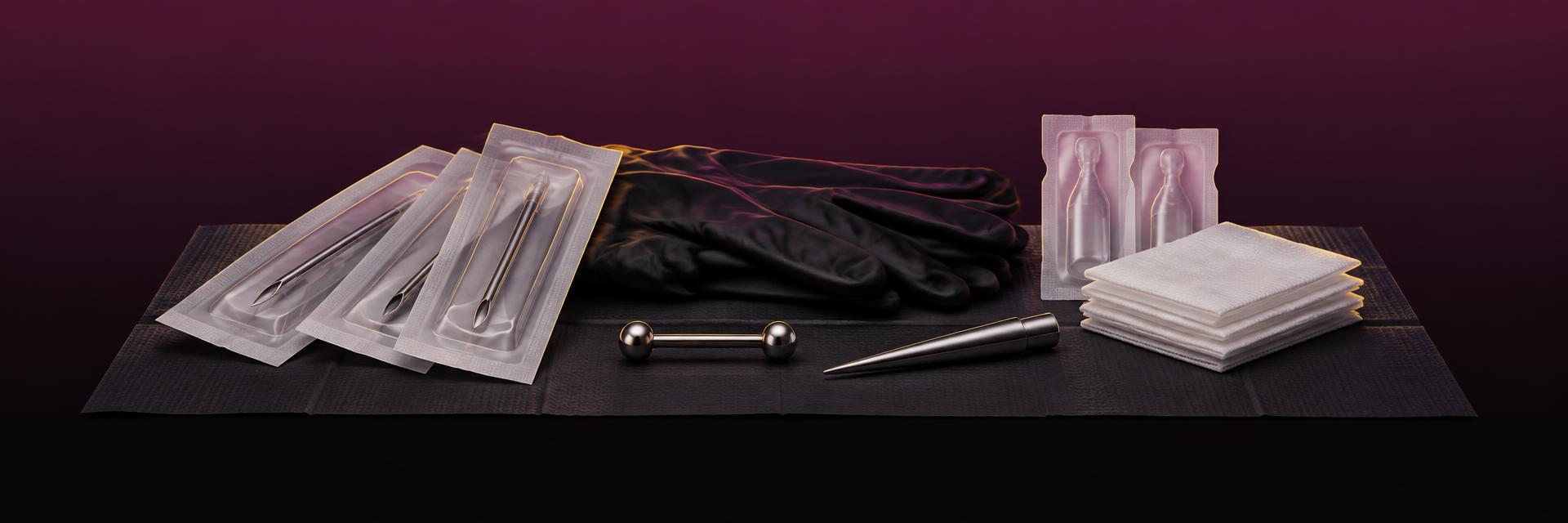
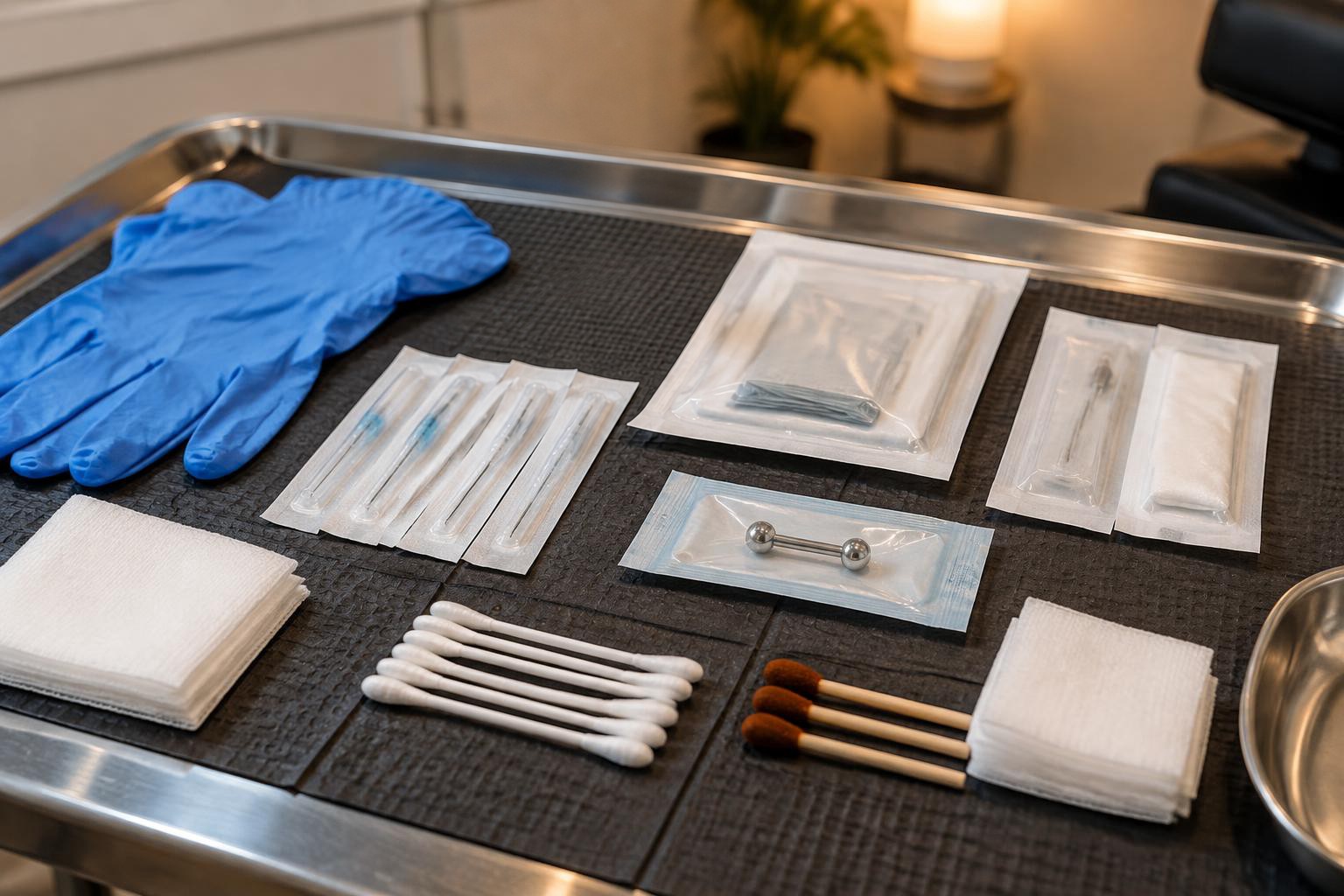
Our tools are cleaned and sterilized in a dedicated clean room — scrubbed, run through an ultrasonic cleaner, then sterilized — so dirty and sterile items never share space. During your piercing we use drape sheets, dental bibs, sterile nitrile gloves, hollow single-use needles, single-use tapers, iodine, and sterile saline packs, set up fresh for every client in a safe, sterile environment. Single-use supplies are thrown away after your appointment, never reused.
None of that is visible in a price tag, but it is the reason we can give your piercing the best possible chance to heal properly.
Not all jewelry metal is the same
Every piercing price includes hand-polished implant-grade titanium (ASTM F136) starter jewelry: a post with a ball, or a barbell with two balls. ASTM F136 is the same specification used for surgical implants, and every piece we use for a new piercing comes from manufacturers whose hand-made, hand-polished jewelry meets APP standards for initial jewelry.
Some low-cost jewelry is made from softer or unverified metal. A soft pin can bend or straighten out, a threaded end can strip so the top falls off, and a weak post can break — none of which you want in a healing piercing.
Why hand-polished jewelry matters
The APP calls for initial jewelry with a smooth, mirror finish and no nicks, scratches, or burrs. A healing piercing grows new tissue right against the jewelry. If the surface is rough or porous, those new cells grow into the tiny flaws, then tear every time the jewelry moves — which slows healing and can build scar tissue. A poor finish may also give bacteria more places to collect.
Hand polishing removes the machining marks that mass-produced jewelry often keeps, so the post slides through the piercing cleanly.
Internally threaded vs. externally threaded
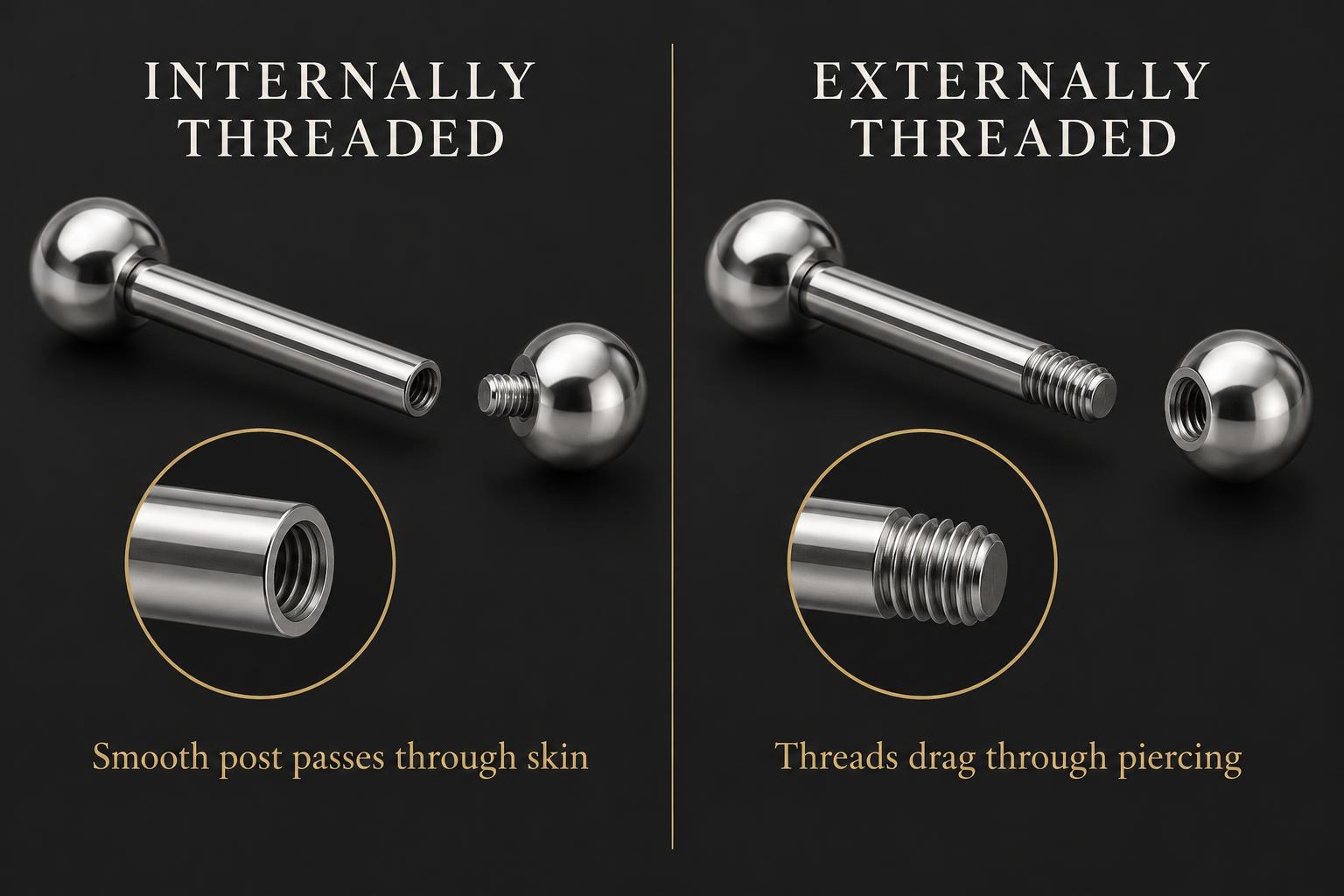
Externally threaded jewelry has the screw threads cut into the post itself, so every time it goes in or comes out, those ridges are dragged through the piercing. Internally threaded jewelry keeps the threads inside the post and on the removable end, so only a smooth surface passes through your skin.
That's why the APP standard for new piercings is internally threaded or threadless (press-fit) jewelry, never externally threaded.
Why we don't use stainless steel
"Surgical steel" and "stainless steel" are marketing terms, not a guarantee of quality — most of what is sold under those names was never tested for wear inside the body. Even true implant-grade steel, which the APP does allow, can contain nickel, one of the most common metal allergies.
We use implant-grade titanium (ASTM F136) instead: it is lightweight, is generally considered nickel-free, and is our standard for every new piercing. If you have a known metal allergy, tell your piercer before your appointment.
Popular piercing prices in Knoxville
Lobes: $70 each or $100 per pair. Our studio estimates 6-8 weeks of healing.
Helix: $70. Our studio estimates 12-15 months of healing.
Nostril: $70 each or $135 per pair. Our studio estimates 9-12 months of healing.
Septum: $80. Our studio estimates 6-8 weeks of healing.
Navel: $75. Our studio estimates 12-15 months of healing.
Nipples: $80 each or $150 per pair. Our studio estimates 12-15 months of healing.
Dermals: $120 or $200 per pair. Our studio estimates 6-8 weeks of healing.
The age minimum beside each item on the menu is the one we follow. For minor piercings, the minor's birth certificate is required, and the attending parent or legal guardian's name must match it. That parent or legal guardian must be present, provide consent, and bring a matching government-issued photo ID.
What every piercing price includes
Piercing prices include standard implant-grade titanium (ASTM F136) jewelry appropriate for your placement, such as a post with a basic ball top or a barbell with balls. Decorative tops and other upgrades cost extra — browse options at www.idlehandsjewelry.co.
Standard jewelry is chosen for healing: a post with a basic ball top, or a barbell with balls, in a body-safe material. A decorative top is a style choice, not a requirement, and your piercer can tell you whether a specific design is suitable while you are still healing.
The deposit, and what happens if your plans change
A $50 non-refundable deposit secures your piercing appointment and is applied toward your piercing total. (Tattoo appointments use a separate deposit that varies with the length of your project, starting at $100.)
Rescheduling a piercing requires at least 48 hours' notice; otherwise, your deposit may be forfeited.
If you arrive more than 15 minutes late, we may need to reschedule your appointment. Your deposit will be forfeited, and a new deposit will be required to rebook.
What else to budget for
A downsize and a jewelry change are not the same thing. A downsize is part of healing: once early swelling goes down, your piercer swaps your starter post or barbell for a shorter one so it sits closer and moves less. That shorter post is new jewelry, so it is a paid package that includes the new implant-grade titanium (ASTM F136) post or barbell. A jewelry change is simply swapping jewelry you already have — a new top or a different style — and for piercings done at Idle Hands it is complimentary, except for dermals and genital piercings.
Your initial post or barbell allows room for swelling. Once that swelling subsides, your piercer can fit a shorter one to help reduce snagging, movement, and irritation. The flat fee is $20, or $50 for genital piercings. It covers your new implant-grade titanium (ASTM F136) post or barbell, a healing assessment, professional fitting and installation, sterilization, and single-use supplies. You can usually keep your existing decorative top if compatible.
For piercings done at Idle Hands, jewelry changes, insertions and removals are complimentary except for dermals and genital piercings. If you were pierced elsewhere, a jewelry change is $20 ($50 for genital jewelry) and an insertion or removal is $20 ($50 for dermals and genitals). Check-ups are always free for everyone.
Why some piercings cost more
A price reflects the work and the supplies, not a markup on the needle. Placements that cost more usually involve more than one piercing or more anatomy: an industrial is two connected helix piercings at $120, paired nostrils, nipples and dermals are quoted per pair, and dermals, surface piercings ($180) and genital piercings (Starting at $180) need custom placement and jewelry.
Specialty work — large gauge piercings, scarring, branding, and NFC/RFID implants — is by consultation, and large gauge work is Starting at $150 procedure fee — jewelry sold separately.
When price isn't the deciding factor
A piercing is a wound you live with for months, so your piercer's assessment of your anatomy, the jewelry they put in, and the aftercare you follow matter more than a few dollars between studios.
Prices and healing estimates here are studio guidance, not medical advice. A piercer can assess jewelry fit and aftercare but cannot diagnose an infection or replace medical treatment. Worsening pain, spreading redness, fever, or feeling unwell needs prompt medical attention.
Questions about pregnancy, breastfeeding, medication, or an existing health condition belong with a qualified healthcare professional before you book.
Ready to get pierced in Knoxville
Appointments are recommended, and walk-ins are welcome when the schedule allows. Call 865.830.3322 or book online — either way, you'll know the price before you're in the chair.
Pat takes the time to talk through placement, jewelry, and aftercare before anything happens. Ask questions, take your time, and leave feeling confident about what you're wearing.